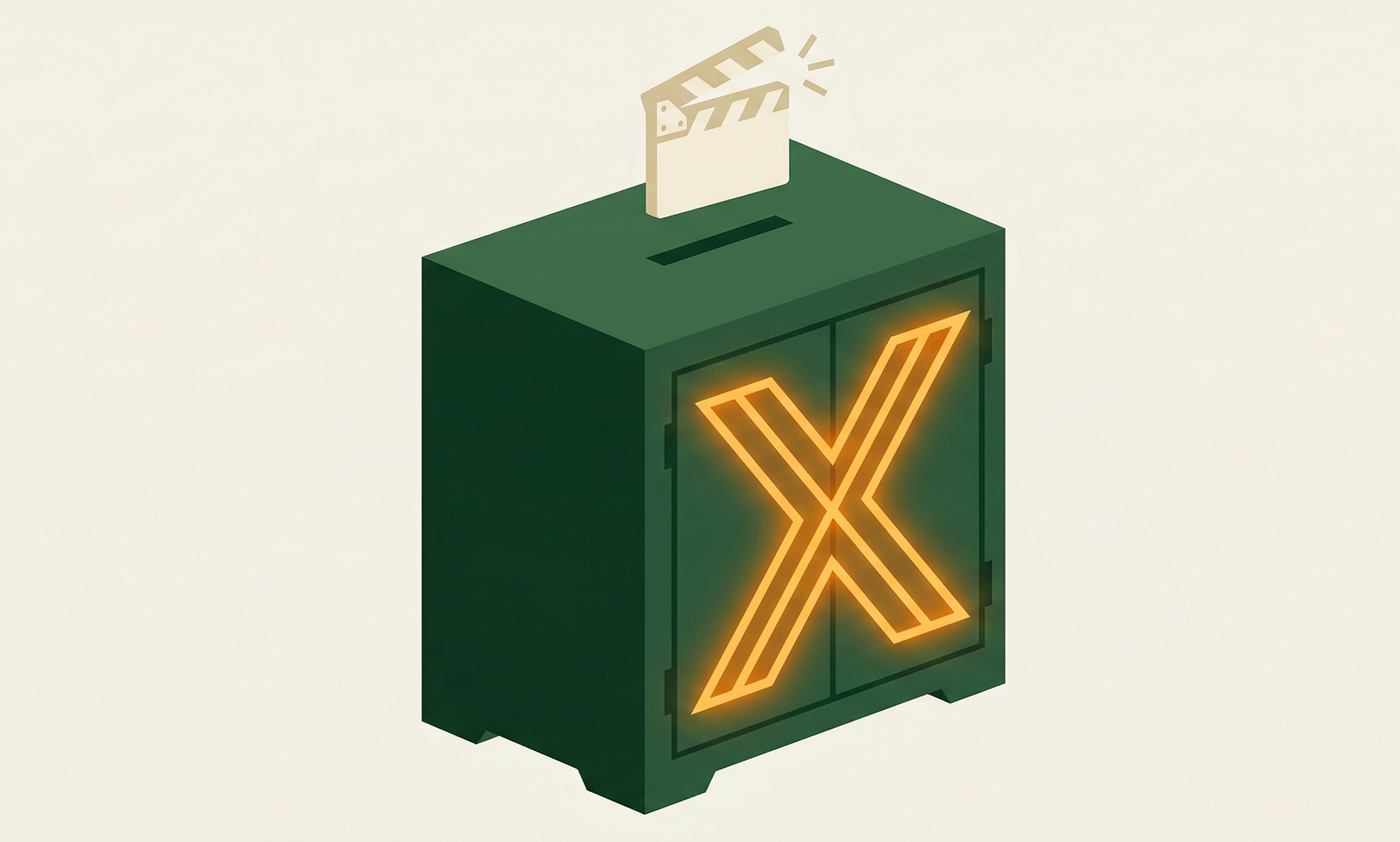
Film and TV Production Insurance Has a Blind Spot. Here's What It Doesn't Cover.
Production insurance is one of the more sophisticated corners of the commercial insurance market. It has had decades to evolve around the specific risk profile of film and television production — the cast, the equipment, the locations, the schedules, the weather. Most major productions carry comprehensive coverage that would make a standard commercial risk manager jealous.
And yet there is a category of risk so large, so recurring, and so financially consequential that production insurance has essentially declined to address it.
Call it reputational implosion. The lead actor arrested the morning of a major streaming release. The writer's room controversy that goes viral and poisons the marketing campaign. The director whose past conduct surfaces during awards season, derailing distribution deals. The showrunner whose mid-production controversy causes a streaming platform to quietly delay or bury the series.
None of these are insurable events under a standard production policy. All of them can cost tens or hundreds of millions of dollars.
What production insurance actually covers
It helps to be specific. A comprehensive production policy typically covers: cast illness or injury preventing filming, death or disability of a key person, weather preventing outdoor shooting, equipment damage or loss, faulty film stock or recording media, extra expense due to location problems, and errors and omissions liability.
What it does not cover: any scenario in which the production can physically continue but commercial viability has been destroyed by reputational events. A lead actor who is arrested but physically capable of working is not a cast insurance claim. A director whose past conduct surfaces mid-production is not a force majeure event. A streaming platform that delays release due to controversy is not a covered contingency.
The streaming era has made this worse
In the traditional theatrical distribution model, there was at least some time between production and public exposure — months of post-production, marketing, and distribution negotiations during which a reputational problem could sometimes be managed before it became a financial catastrophe.
The streaming era has compressed all of that. A show can go from production to global release in weeks. Marketing campaigns now depend heavily on talent involvement — interviews, social media presence, press tours — in ways that amplify the financial consequences of a talent controversy in the lead-up to release.
The result is that the gap between what production insurance covers and what production companies actually need has widened significantly in the past decade, even as the policies themselves have barely changed.
The parametric alternative
The fundamental challenge in insuring reputational risk is that there's no clean way to assess damages after the fact. What is a streaming delay worth? What is the cost of a poisoned marketing campaign? These are genuinely hard to quantify, which is why traditional insurance has avoided them.
Parametric contracts solve this by shifting the question entirely. Instead of asking "what did this controversy cost you?" — a question that requires an adjuster and a negotiation — a parametric contract asks "did this specific, verifiable event occur?" If a lead actor's arrest is publicly reported within 30 days of the release date, the contract pays out. The trigger is binary. The payout is agreed in advance.
This doesn't require the insured to prove causation between the controversy and their financial loss. It doesn't require an adjuster to assess reputational damage. It requires only that the triggering event be verifiable, which — in an era of public records, social media, and entertainment journalism — it almost always is.
For production companies that have spent years accepting reputational risk as simply unhedgeable, this is a genuinely new option. The infrastructure that makes it possible — CFTC-regulated prediction market exchanges with sufficient liquidity for commercial-scale contracts — is recent enough that most of the industry hasn't encountered it yet.
The gap is real. The solution now exists. The only question is who figures it out first.
Also update the footer on all existing pages (homepage, /start, /how-it-works, /use-cases, /faq) to add "Blog" as a link under the "Learn" column in the footer, pointing to /blog.