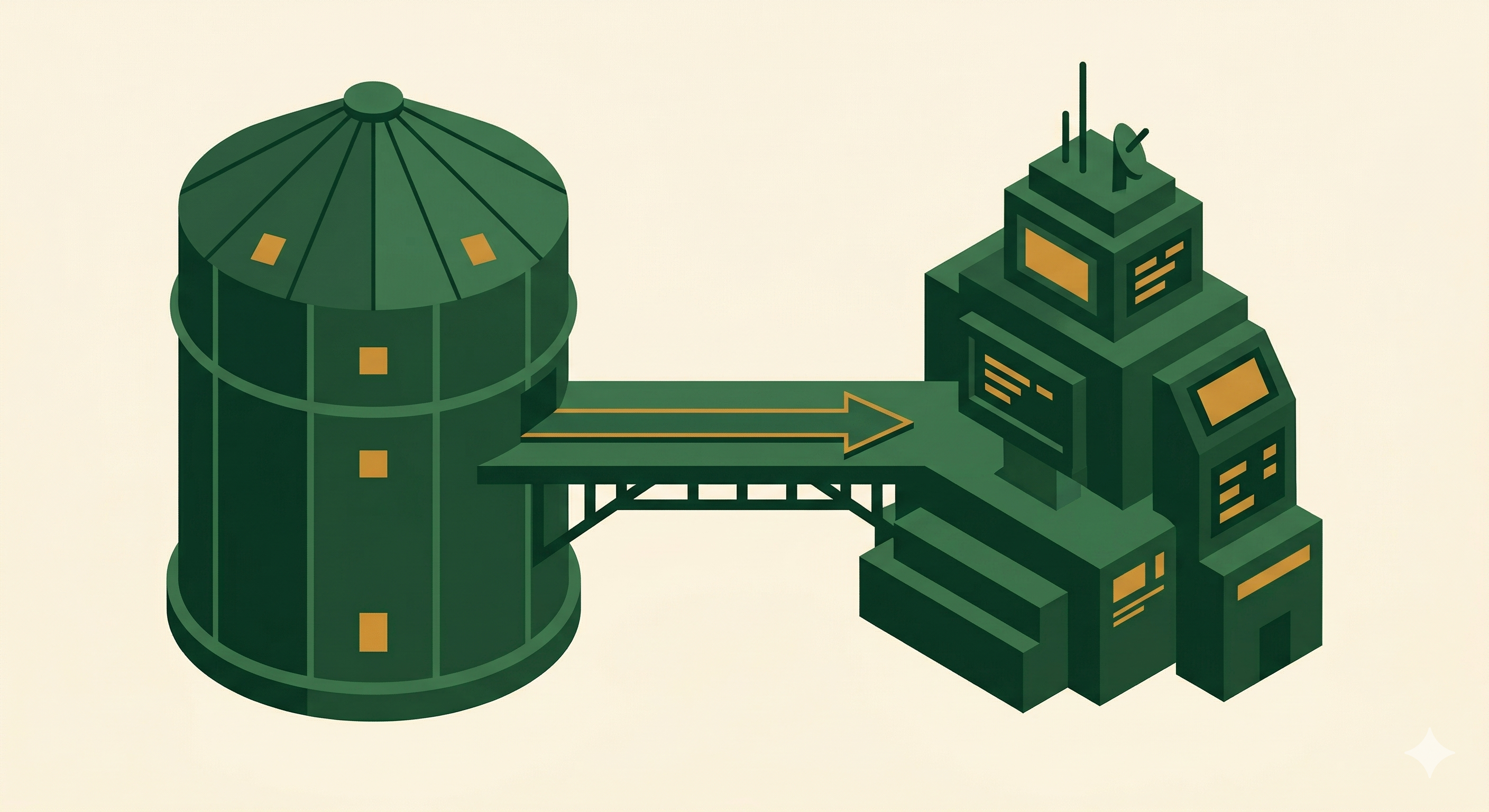
From Grain Gambling to Global Infrastructure: How Commodity Futures Became Legitimate — and What Prediction Markets Can Learn
In 1892, a bill was introduced in the United States Congress to ban commodity futures trading entirely. Its sponsors argued, with some justification, that futures markets were primarily a vehicle for speculation — a way for financiers in Chicago to profit from price movements in grain they would never touch, to the detriment of the farmers who actually grew it and the millers who actually needed it.
The bill failed. Futures markets survived. And over the following century, they became the backbone of global agricultural, energy, and financial risk management — instruments so fundamental to the functioning of the modern economy that the idea of banning them now seems almost incomprehensible.
Prediction markets are at approximately the 1892 moment.
How futures markets earned legitimacy
The story of commodity futures legitimisation is not primarily a story about regulation, though regulation played a role. It is a story about participation.
The Chicago Board of Trade, founded in 1848, initially attracted the same mix of commercial users and speculators that characterises any new market. Farmers and grain merchants used futures to lock in prices and manage uncertainty. Speculators provided liquidity and took the other side of commercial hedges. The two groups needed each other, even as they regarded each other with some suspicion.
What changed the public and regulatory perception of futures markets was the accumulation of evidence that they served genuine economic functions. Grain prices became less volatile in markets where futures trading was active. Farmers who used futures had better cash flow predictability. Millers who hedged their flour costs could offer more stable bread prices. The speculative element — which never disappeared — became harder to disentangle from the commercial function it was enabling.
Over time, regulatory frameworks caught up. The Grain Futures Trading Act of 1922, the Commodity Exchange Act of 1936, and ultimately the Commodity Futures Trading Commission created in 1974 provided the oversight structure that gave large institutional participants the confidence to enter the market at scale. Each regulatory milestone was followed by an expansion of commercial participation and a deepening of liquidity.
Where prediction markets stand today
Kalshi, the largest CFTC-regulated prediction market exchange in the United States, is a designated contract market — the same regulatory category as the Chicago Mercantile Exchange. It operates under federal oversight, with full collateralisation requirements and the same legal standing as any other exchange-traded derivative.
This is not a grey-market operation. The CFTC spent years reviewing Kalshi's application, and the approval it eventually granted represented a considered regulatory judgment that prediction markets, structured correctly, are legitimate financial instruments.
The institutional validation has followed. The Federal Reserve's research division has published findings confirming that Kalshi's markets outperform traditional forecasting models. Tradeweb — which processes trillions in bond and derivative trades — has struck a commercial partnership with Kalshi. ICE, the NYSE's parent company, has invested billions in Polymarket. Prime brokers are building access infrastructure for institutional clients.
This is the same sequence that legitimised commodity futures in the early 20th century: regulatory framework, followed by evidence of accuracy and utility, followed by institutional capital deciding the market is worth taking seriously.
The commercial participation gap
What commodity futures had in the early 20th century that prediction markets still largely lack is deep commercial participation — the farmers, millers, airlines, and manufacturers who use these markets primarily to hedge real business exposures rather than to speculate.
Commercial users bring something to a market beyond liquidity. They bring information. A farmer who sells corn futures before harvest is expressing a view about the relationship between their expected production and the price they need to be viable. That information — embedded in the trade — makes the market price more accurate and more useful for everyone.
For prediction markets, the equivalent would be businesses using event contracts to hedge real commercial exposures. A festival operator buying contracts tied to rainfall at their venue. An importer buying contracts tied to tariff refund timelines. A production company buying contracts tied to talent controversy risk. Each of these trades embeds real commercial information into the market price, making it more accurate for every other participant.
That commercial participation layer is beginning to emerge. It is not yet deep. The businesses that enter it early — that build the internal competency to use prediction markets as a risk management tool before their competitors — will benefit from lower costs, better pricing, and the competitive advantage of having figured something out that most of their peers haven't.
The grain trading houses of 1870s Chicago didn't know they were building global financial infrastructure. They were trying to manage the uncertainty of the harvest. The commercial businesses that start using prediction markets for risk management today are in a similar position: solving a practical problem, without necessarily appreciating the scale of what they're building toward.
The direction of travel, for anyone who looks at the historical pattern, is not particularly mysterious. The question is only how long it takes to get there, and who arrives first.